Academic City Introduces New AI, Electric Vehicle, Nuclear and Robotics Programmes for Africa’s Future
May 13, 2026 2026-06-17 14:37Academic City Introduces New AI, Electric Vehicle, Nuclear and Robotics Programmes for Africa’s Future
Academic City Introduces New AI, Electric Vehicle, Nuclear and Robotics Programmes for Africa’s Future
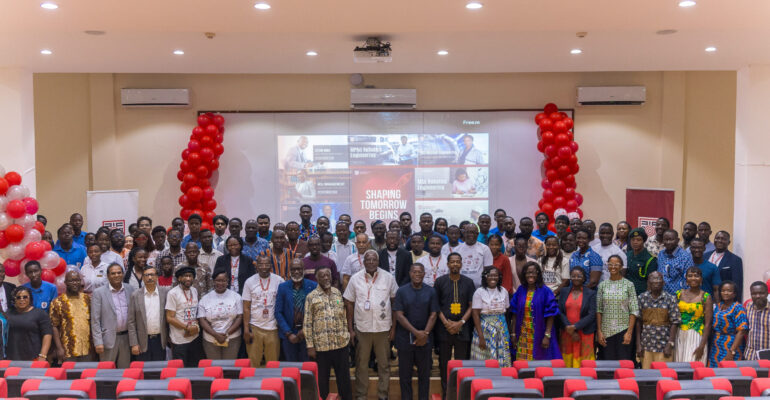
Academic City University has launched nine new undergraduate and postgraduate programmes aimed at equipping Africa with the human capital, innovation and leadership needed to solve national challenges and compete in a rapidly evolving global economy.
The programmes are BSc Data Science and Artificial Intelligence, BSc Electric Vehicle Engineering, BSc Nuclear Engineering, BSc Unmanned Aerial Systems Engineering, MPhil Material Sciences & Engineering, MSc Management, MPhil Robotics Engineering, MSc Robotics Engineering and STEM-MBA.
With the introduction of the BSc Electric Vehicle Engineering, BSc Nuclear Engineering and BSc Unmanned Aerial Systems Engineering programmes, Academic City becomes the first university in Sub-Saharan Africa to offer undergraduate degree programmes in both Nuclear Engineering and Unmanned Aerial Systems Engineering.
These strategic new programmes represent a significant milestone in our mission to develop globally competitive graduates equipped with the technical expertise, leadership capacity and innovative mindset required to drive national and continental development. They are designed in response to emerging industry demands and are aligned with global trends in science, technology, engineering and management education.
Speaking at the launch, Prof. Fred McBagonluri, President of Academic City, said the programmes formed part of the university’s Vision 2030 strategy and were intentionally designed to address sectors shaping the future of work and economic transformation.
According to him, Ghana and Africa as a whole must move beyond simply consuming imported technologies and instead develop the expertise and research capacity to create solutions locally.
“Ghana is one of the world’s leading cocoa producers, yet much of what we need to know about cocoa, the science, processing, economics, and value addition, is not housed here. We need to be intentional about how we develop this country,” he said.
Prof. McBagonluri explained that the programmes were built around three strategic priorities: strengthening Africa’s existing advantages, solving local challenges through innovation, and developing transformational leadership capable of driving national progress.
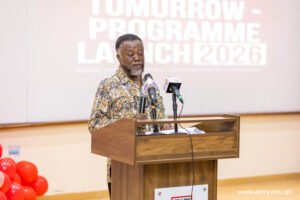
Also speaking at the event, former President of the Ghana Institution of Engineering, Dr Kwame Boakye, stressed the importance of engineering in national development and industrial growth.
“We can pray every day, but if we do not embrace engineering, we are not going anywhere. We must infuse new blood into the profession,” he stated.
As part of the launch activities, guests toured an exhibition showcasing practical student-led projects focused on solving societal problems through technology and engineering.
The exhibition featured projects including a digital preservation system for historical artefacts and an emergency response communication system integrating voice recognition and hand gesture technology to support vulnerable persons.