
How Three Computer Science Students Turned Personal Tragedy into a Life-Saving Healthcare Innovation
July 31, 2026 2026-07-31 14:03How Three Computer Science Students Turned Personal Tragedy into a Life-Saving Healthcare Innovation

How Three Computer Science Students Turned Personal Tragedy into a Life-Saving Healthcare Innovation
When a 76-year-old woman suffered a stroke when left alone in an overheated room, three computer science students saw more than a tragic incident. They saw a problem that technology could solve.
That moment inspired Famous Akpovogbeta, Abdoul Latif Dabone, and Maureen Amago, final year students at Academic City University, to develop Elitra—an intelligent wearable device designed to monitor vulnerable patients in real time and alert caregivers before emergencies become life-threatening.
Their answer was Elitra; an intelligent wearable healthcare device designed to provide real-time monitoring, detect critical changes in a patient’s condition, and alert caregivers before a situation becomes critical.
Rather than looking for an easy coding project to fulfill their graduation requirements, team members Famous Akpovogbeta, Abdoul Latif Dabone, and Maureen Amago looked at a painful, real-world tragedy, took ownership of the problem, and engineered an active solution.
It All Started with a Medical Emergency
The project was not born in a laboratory or classroom exercise. It emerged from a personal story that demonstrated how quickly a medical emergency can become fatal when help arrives late.
The elderly woman survived, but she endured hours of silent suffering because her family members had no way of knowing she was in danger. “We wanted something that could speak when a patient couldn’t,” says Famous. “If her daughter had a mobile application that could get instant alerts and notifications when thresholds were exceeded, she would have been able to attend to her faster,” says Latif.
According to health experts, delayed emergency response remains one of the leading challenges affecting elderly people and individuals living with disabilities, particularly those who live alone. The students believed technology could help bridge that gap.
What Makes Elitra Different?
In many healthcare settings, especially those with limited resources, medical professionals often care for multiple patients at once. Continuous monitoring can be difficult, particularly during critical procedures when every second counts.
Elitra was designed to act as an intelligent assistant rather than a replacement for healthcare professionals. Some of the key features of Elitra include:
1. The Sensing Layer (Hardware)
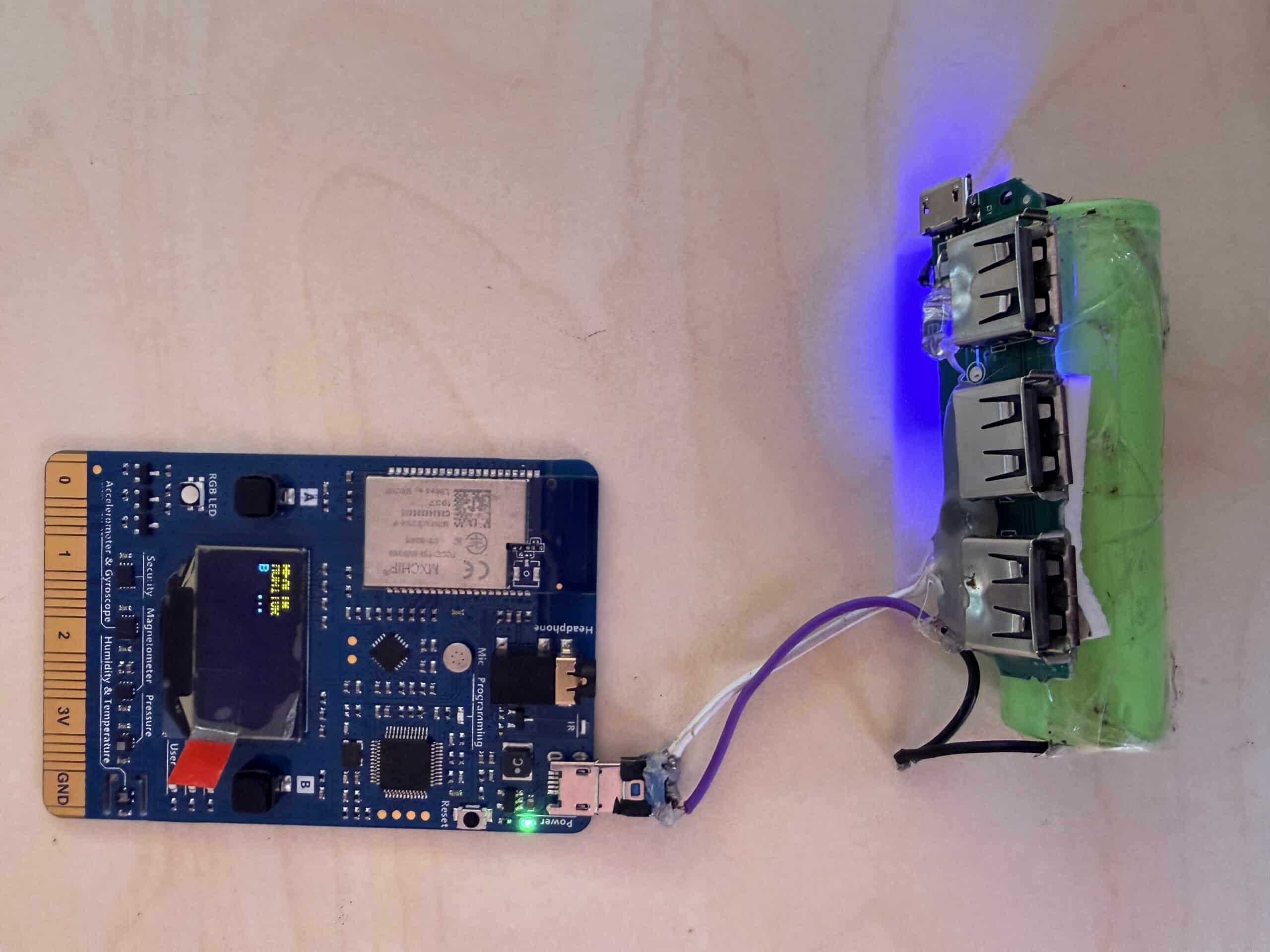
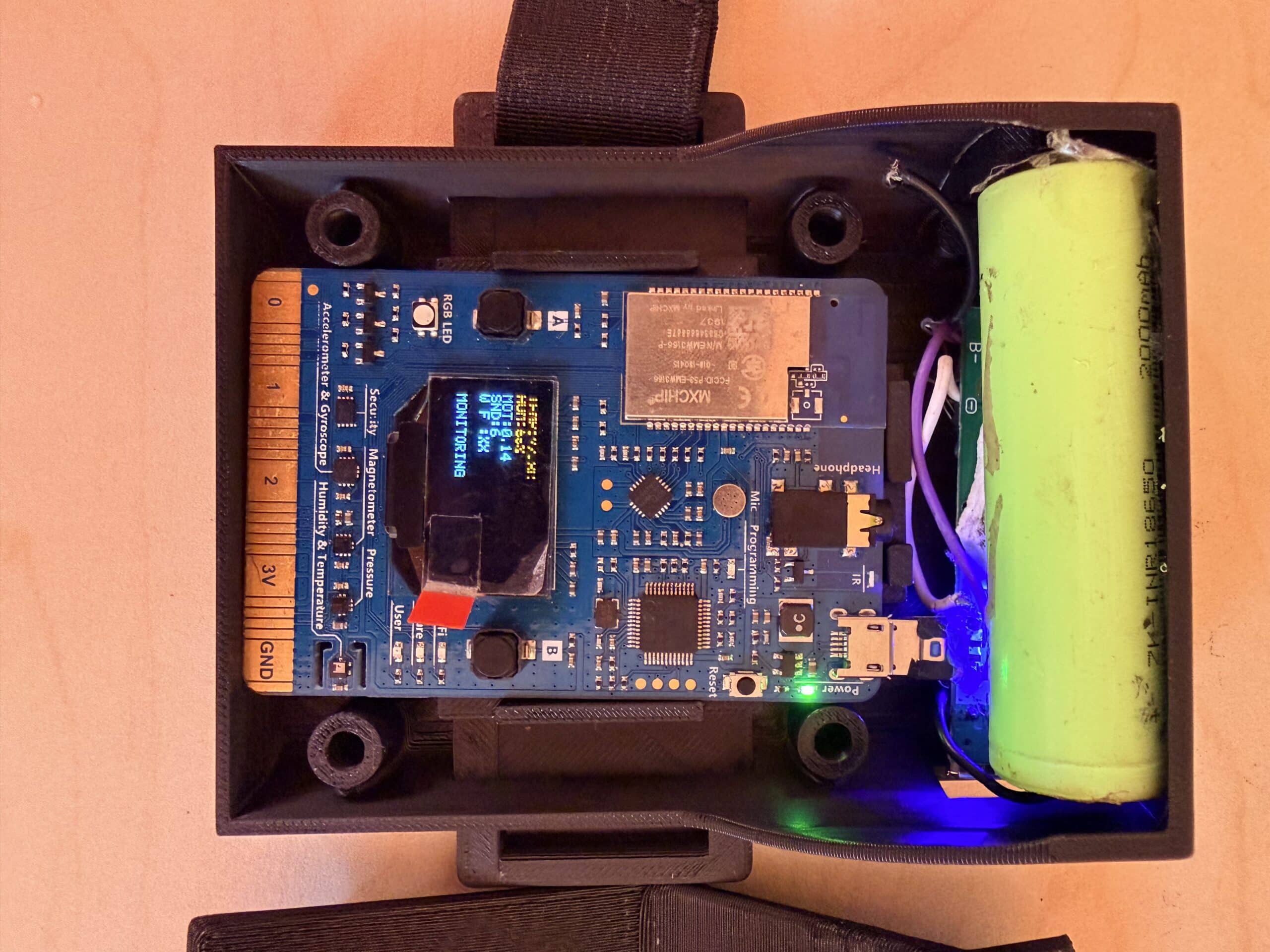
At the heart of Elitra is the MXChip AZ3166, an advanced, cloud-ready microcontroller. This compact hardware contains a suite of physical sensors that constantly measure the environment:
- Ambient Temperature & Humidity Sensors: Measures room temperature and humidity to detect conditions that could trigger heat-related illnesses.
- Motion Sensors: Built-in sensors identify unusual inactivity or sudden falls.
- Microphone: Recognizes distress sounds or calls for help.
2. The Network Layer (Cloud Infrastructure)
Collecting information is only the first step. The real value lies in delivering that information instantly to those who can act on it.
Elitra utilizes Google Firebase as its real-time database and cloud service. When the sensors register a spike in temperature or a sudden drop in movement, the data is pushed securely to the cloud in milliseconds.
3. The Application Layer (Caregiver Dashboard)
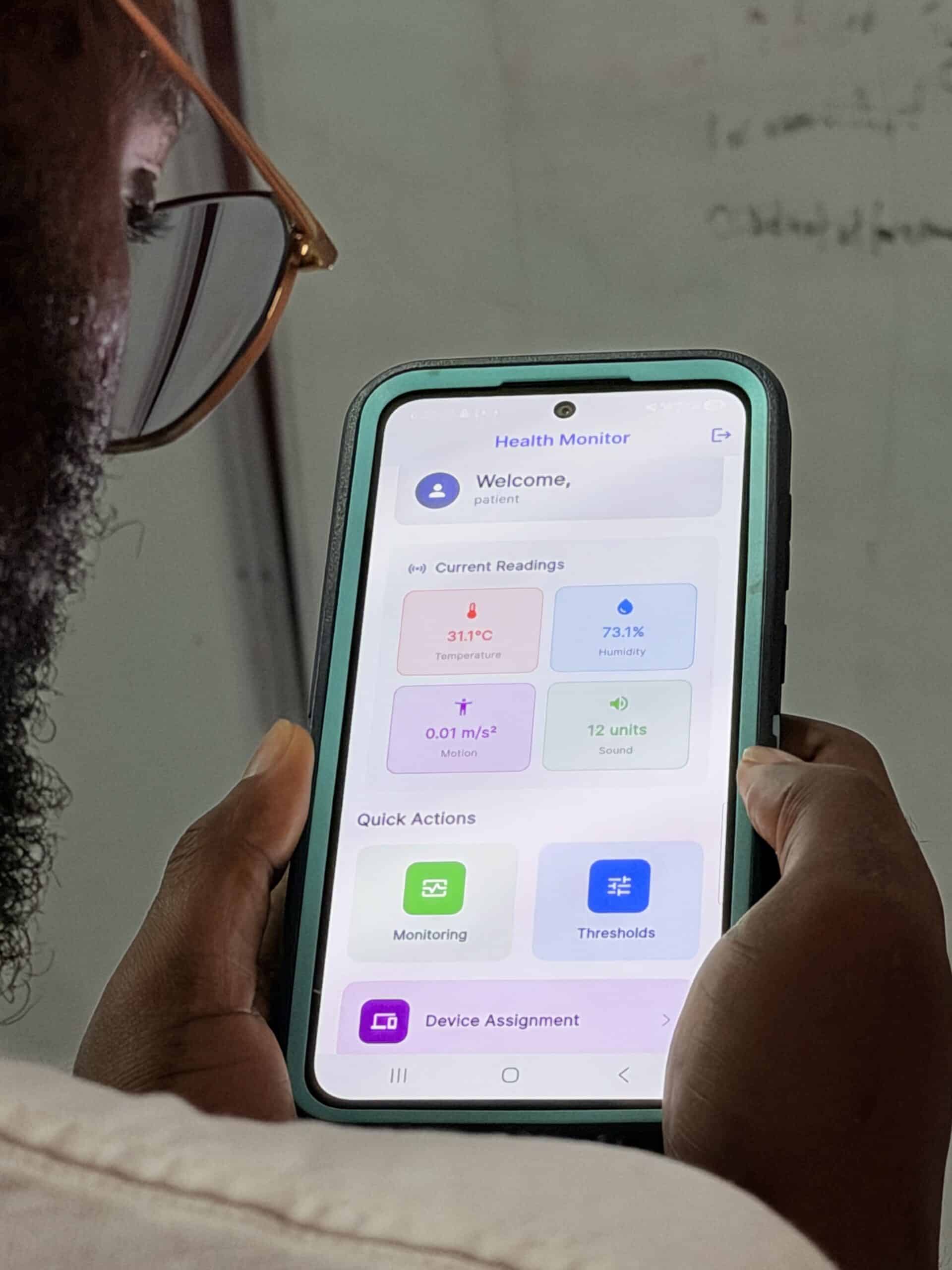
The team developed a mobile application using Flutter that enables caregivers to monitor conditions remotely and customize alert thresholds.
Designed with non-technical caregivers in mind, the dashboard allows family members to set custom thresholds. If an elderly parent is sensitive to extreme heat, or an autistic child needs a specific sensory environment, the caregiver is notified instantly on their phone.
Your Innovation Could Be Next
Every breakthrough begins with a question, and at Academic City University, students are encouraged to ask difficult questions, challenge conventional thinking and develop solutions that address real problems facing society. Students pursuing Computer Science, Artificial Intelligence, Robotics Engineering, Data Science, Electrical and Electronic Engineering, and other STEM disciplines learn in an environment where education goes beyond the classroom and ideas become real-world impact.
Like the team behind Elitra, you won’t just study technology. You’ll use it to solve meaningful challenges, collaborate with talented peers, and gain hands-on experience that prepares you for the future.
Although still at the prototype stage, the students believe Elitra has the potential to support hospitals, caregivers and families caring for vulnerable people. Their long-term vision is to refine the device further and explore opportunities for deployment in healthcare facilities and homes.
For Famous, Latif and Maureen, Elitra is more than a university project. It is proof that innovation begins with empathy. By turning a painful real-life experience into a practical healthcare solution, the three graduates have demonstrated how technology can do more than automate tasks, it can help save lives.
If you’re looking for a university where innovation is part of everyday learning, Academic City University is ready to help you turn your ideas into reality. Explore our programmes, visit our campus, and apply today. Your journey toward creating innovative solutions that make a lasting impact starts here.

