The Ghana BioInnovation Centre exists to improve healthcare outcomes across West Africa by advancing locally driven biomedical innovation.
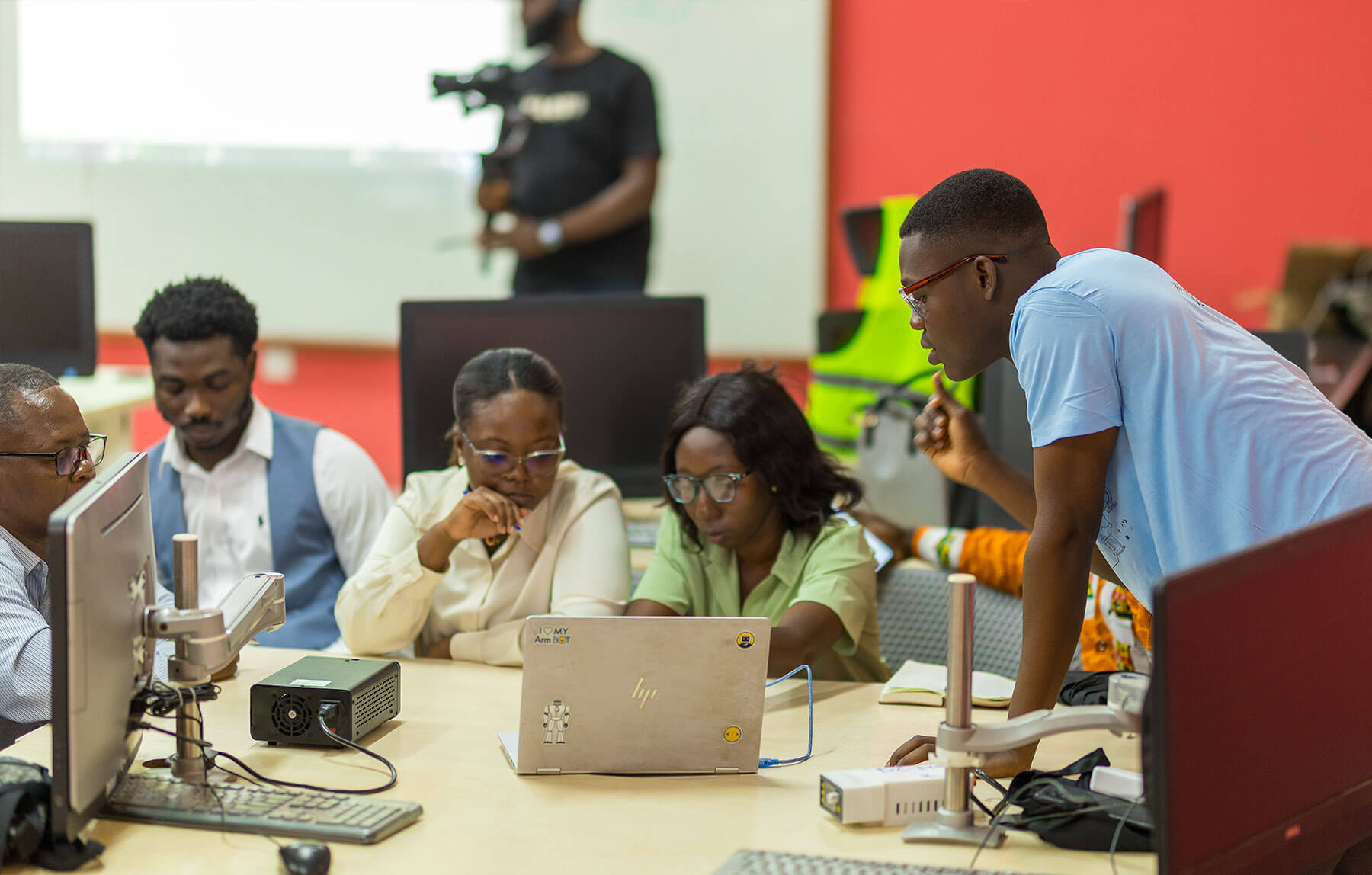
Working at the intersection of healthcare, engineering, and entrepreneurship, the Centre empowers innovators with the expertise, infrastructure, and collaborative environment needed to design, prototype, and validate medical technologies that address real healthcare challenges.
Unlike conventional research laboratories, the Centre develops and tests medical devices in the environments where they are intended to be used. By designing for low resource settings, including rural clinics with limited infrastructure, the Centre creates affordable, resilient, and scalable technologies that improve healthcare delivery locally while meeting the demands of emerging global healthcare markets.
Through research, industry partnerships, and real world field validation, the Centre accelerates the journey from innovation to impact, transforming ideas into practical medical solutions that improve lives across Africa and beyond.
We envision West Africa as a global center of excellence in context-driven biomedical innovation—where:
To improve healthcare outcomes by:
Our work is grounded in:
The BioInnovation Centre is powered by a founding partnership between:
Engineering excellence, student innovation, and world-class facilities
Provides engineering expertise, multidisciplinary student innovation teams, advanced laboratory and prototyping facilities, and strong access to Ghana's healthcare ecosystem to accelerate the development and validation of impactful medical technologies.
Biomedical engineering expertise, research, and global collaboration
Contributes internationally recognised biomedical engineering expertise through collaborative research, curriculum development, faculty exchange, and joint innovation initiatives that strengthen education and medical technology development.
Commercialisation, industry engagement, and market access
Drives commercialisation by supporting market entry, distribution pathways, industry partnerships, and business development to help innovative healthcare technologies reach the communities that need them most.
Located on the Academic City University campus in Accra, the Ghana BioInnovation Center brings engineers, clinicians, and entrepreneurs together.
The Initiative is led by a multidisciplinary team of scientists, engineers, business leaders, and innovators
President
Academic City University — Accra, Ghana
Professor of Bioengineering
Northeastern University — Boston, USA
General Counsel
4GBI
Director
Ghana BioInnovation Center — Accra, Ghana
Faculty, Bioengineering
Northeastern University — Boston, USA
Distinguished Professor
D'Amore-McKim School of Business — Boston, USA
VP Academics
Academic City University — Accra, Ghana
Technical Lead
Ghana Bioinnovation Center - Accra, Ghana
The Ghana BioInnovation Center:
Equips engineers, healthcare professionals, researchers, and entrepreneurs with the knowledge, tools, and support to design, prototype, validate, and commercialise medical technologies that address Africa's most pressing healthcare challenges.
Brings together engineering, clinical insight, research, and entrepreneurship to develop affordable, resilient medical devices tailored for rural and low resource healthcare settings, while supporting regulatory readiness and real world implementation.
Offers modern prototyping facilities, technical mentorship, and real world clinical field validation to develop, refine, and test medical technologies from concept through deployment.
Fosters collaboration among academia, healthcare providers, industry, government, and development partners to accelerate biomedical innovation, commercialisation, technology transfer, and sustainable healthcare impact across Africa.
Of imported medical devices fail in sub-Saharan Africa (WHO) because they were never designed for these conditions
Growth rate of the home healthcare device market globally, driven by payer pressure, aging populations, and post-acute care shifts
Now sell GE's MAC-i ECG, originally designed for rural India under the same constrained-environment logic
Rural health clinics in Ghana alone the primary deployment and validation environment
More than a facility — a platform for impact.
Purpose-built laboratories, prototyping studios, and testing facilities that enable innovators to move rapidly from idea to viable medical solutions.
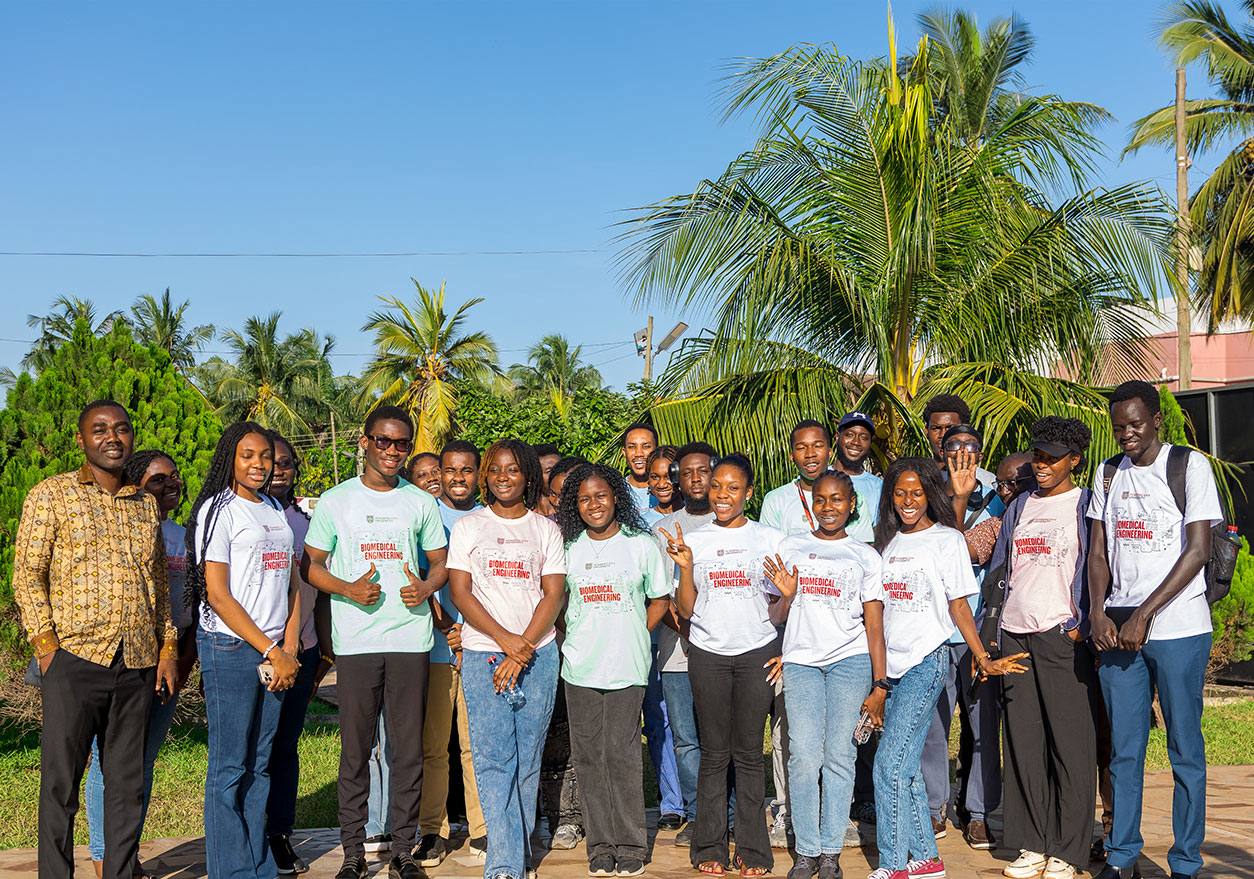
A flagship hub for West Africa, training and inspiring the next generation of biomedical engineers, researchers, and entrepreneurs to solve Africa’s most pressing health challenges.
Structured incubation and commercialization pathways that support startups and university spin-outs—turning promising research into deployable, market-ready medical technologies.
The capacity to advance medical devices from concept and prototype through clinical validation, manufacturing readiness, and regional scale ensuring solutions reach the communities that need them most.
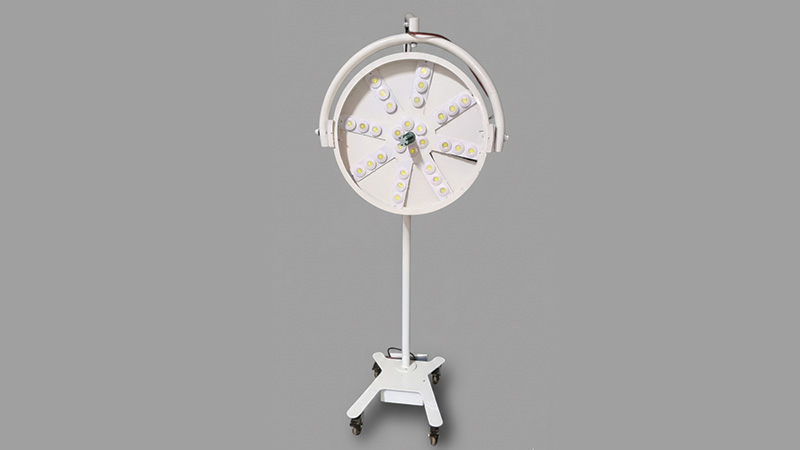
A battery-powered, optionally solar-integrated lamp providing 40,000–160,000 lux for surgeries in clinics with unreliable power.
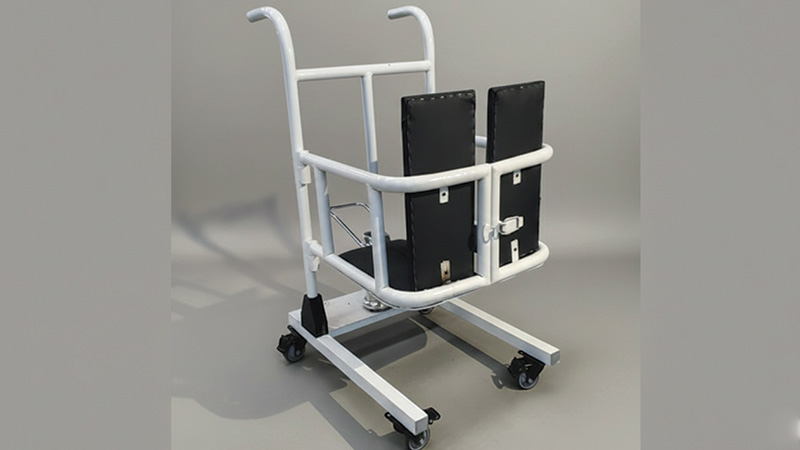
A multifunctional, low-cost wheelchair with integrated commode, designed for mobility and toileting needs.
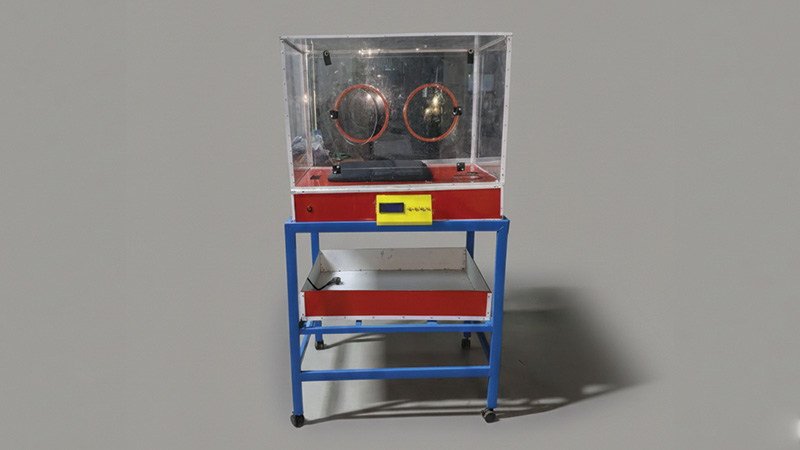
A microcontroller-based incubator built for low-resource clinics, maintaining optimal temperature, humidity, and air quality for newborns.
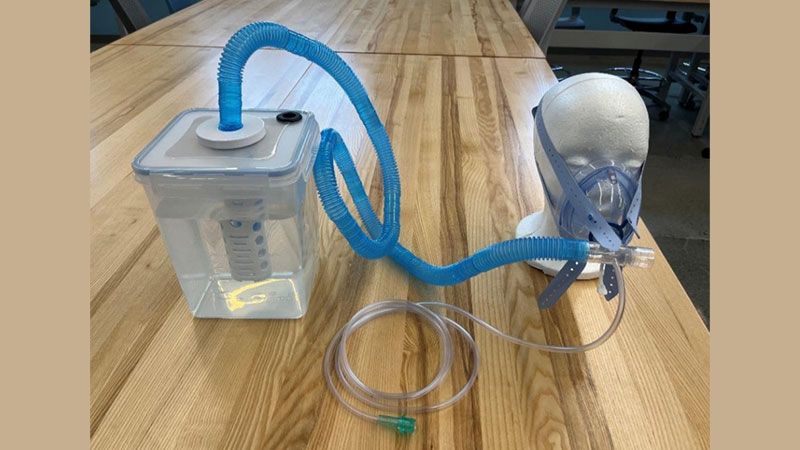
A simple respiratory support device addressing critical gaps in rural healthcare. Deployed in hospitals across Ghana, Zambia, and Tanzania.
An affordable digital stethoscope using 3D-printed chest piece and smartphone integration with AI-powered diagnostic support.
Academic City University will host the Medical Innovation Expo 2026, a three-day event exploring locally designed healthcare solutions for Africa's most pressing medical challenges. Under the theme "Beyond the No-Bed Syndrome: Locally Designed Systems That Deliver Care," the expo will bring together innovators, clinicians, researchers, entrepreneurs, and policymakers to showcase medical technologies, exchange ideas, and drive collaboration for stronger health systems.
From field visits and practical workshops to prototype showcases, poster presentations, and plenary sessions, the expo offers a platform to discover innovations that can improve care delivery in low-resource settings.
Learn More & RegisterFrom first field visits in Ghana to a returning flagship expo — the milestones and ongoing activities shaping the Centre.
Returning 22–24 September 2026 at Academic City University under the theme "Beyond the No-Bed Syndrome: Locally Designed Systems That Deliver Care" — field visits, workshops, prototype showcases, poster presentations, and plenary sessions.
Register NowAn ongoing series of conversations with industry leaders, innovators, entrepreneurs, academics, and changemakers — recorded sessions are available in our video library.
Watch Past SessionsA three-day event at Academic City University that brought together over 200 healthcare professionals, students, and entrepreneurs for rapid prototyping workshops, panel discussions, and showcases of African-developed medical technologies.
Following research on the Smallwood Device, 4GBI was established and a summit in Accra convened 125 sector leaders to discuss partnerships, challenges, and strategies for advancing local healthcare solutions.
Northeastern University faculty conducted field visits to hospitals, clinics, and rural communities; led workshops at the University of Ghana; and engaged key stakeholders, including the Minister of Health and His Majesty Osagyefuo Amoatia Ofori Panin.
Explore past sessions featuring conversations with industry leaders, innovators, entrepreneurs, academics, and changemakers — designed to inspire future-ready thinking, leadership, innovation, and real-world impact.

Meaningful healthcare innovation is built through collaboration. We work with organisations and individuals committed to developing affordable, locally driven medical technologies for Ghana and West Africa.
We welcome partnerships with:
Whether your interest is research, product development, clinical validation, capacity building, commercialisation, or investment, we would be pleased to explore opportunities to work together.
Help us accelerate biomedical innovation that addresses real healthcare challenges in low-resource settings.
Your support enables us to:
We welcome financial contributions, equipment donations, technical expertise, research collaborations, and strategic partnerships.
We'd love to hear from you. Whether you are an industry partner, researcher, university, healthcare provider, government agency, development partner, donor, or innovator, we welcome opportunities to collaborate.
Let's work together to transform ideas into solutions that make quality healthcare more accessible where it is needed most.