
Bachelor of Arts in Film and Digital Technologies
Bachelor of Arts in Film and Digital Technologies

Bachelor of Arts in Film and Digital Technologies
Storytelling Is Evolving Across Screens, Platforms and Technologies
Film and media today extend far beyond traditional cinema and television. Storytelling now happens across streaming platforms, digital content, animation, gaming, interactive media, podcasts, motion graphics, and emerging technologies such as AI, virtual reality, and immersive experiences.
Academic City’s Bachelor of Arts in Film and Digital Technologies equips students with the creative, technical, and digital skills to thrive in this fast-evolving media landscape. The programme combines strong foundations in film, screen storytelling, and visual communication with hands-on training in cinematography, editing, sound, animation, game design, interactive media, and digital production workflows. Graduates will be prepared to create compelling stories for diverse platforms and pursue careers across film production, digital content, postproduction, sound, animation, gaming, and creative entrepreneurship.
BA Film and Digital Technologies at ACity
The programme prepares students to become future-ready storytellers, producers and digital creators in an increasingly converged media industry. Students develop strong creative and technical foundations in film, television and digital media while building practical expertise in visual storytelling, sound, editing, motion graphics, interactive media, digital distribution and emerging technologies.
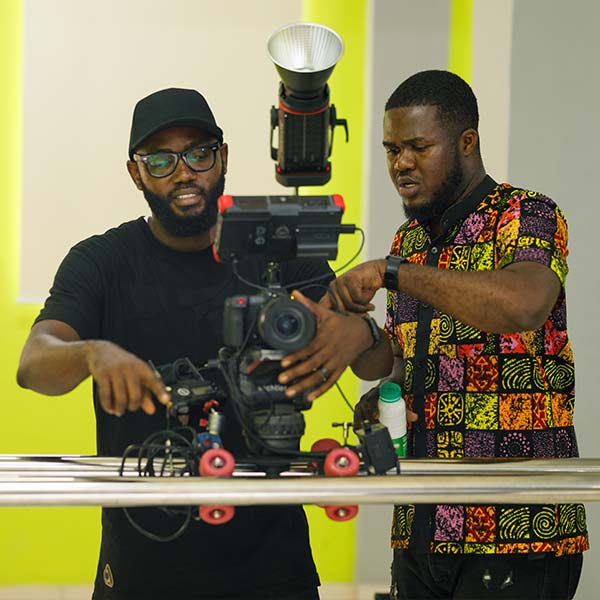
Through studio-based learning, production labs, collaborative projects, industry attachment and a final-year capstone, students will learn to move from concept to screen — developing stories, shooting, editing, designing sound, creating motion graphics, building digital experiences and producing content for film, streaming, online platforms and interactive media environments.
Top Careers in Film and Digital Technologies
Graduates of this programme may pursue careers such as:
- Film Director
- Cinematographer
- Video Editor
- Digital Content Creator
- Social Media Content Producer
- Motion Graphics Designer
- Animator
- Game Designer
- Visual Effects (VFX) Artist
- Creative Entrepreneur
Entry Requirements
Applicants must obtain credits in three core subjects, including English Language, Mathematics and Social Studies or Integrated Science, plus credits in three relevant elective subjects or approved equivalent qualifications relevant to the chosen programme. Applicants must achieve an aggregate score of 24 or better.
Applicants must obtain credits in three core subjects, including English Language, Mathematics and Social Studies or Integrated Science, plus credits in three relevant elective subjects or approved equivalent qualifications relevant to the chosen programme. Applicants must achieve an aggregate score of 36 or better.
Relevant electives may include subjects in General Arts, Business, Visual Arts, Media, ICT, Literature, Languages, Music, Graphic Design, Economics, History, Government and related areas.
Applicants must have credits in five GCE Ordinary Level subjects, including English Language and Mathematics, plus passes in three Advanced Level subjects.
Applicants must have completed the International Baccalaureate Diploma or Diploma Programme Course with passes in the required subjects, including Mathematics and English.
Applicants must have completed the French Baccalaureate with the required pass mark and overall average.
Applicants must possess a Grade 13 qualification with a minimum GPA of 2.50.
All foreign qualifications will be referred to GTEC for determination of equivalence and eligibility for admission to tertiary institutions in Ghana.
Electives
Year 3 – Semester 1 Electives
- Directing for Film and Interactive Media
- Advanced Cinematography and Lighting Techniques
- Sound Design
- Postproduction Sound Mastering
- Advanced Digital Editing Techniques
- Editing for Different Genres
- Programming for Games
- Interactive Media and Gamification Design
Year 3 – Semester 2 Electives
- Directing for Documentary
- Script / Screenwriting
- Foley Artistry
- Audio Recording and Production
- Colour Correction and Grading
- Sound Editing and Mixing
- Virtual and Augmented Reality Production
- Advanced Game and Interactive Media Production
Course Outline
- Introduction to Film and Digital Media
- Visual Storytelling and Composition
- Introduction to Programming
- Technology and Society
- Essential Mathematics
- Communication Skills I
- French Language I
- Digital Photography and Imaging
- Introduction to Sound
- Digital Editing and Postproduction Tools
- Scriptwriting for Screen and Storyboarding
- Communication Skills II
- Introduction to Philosophy
- French Language II
- Film History, Genre and Criticism
- Cinematography
- Motion Graphics and Animation in 2D
- Introduction to Game Design and Gamification
- Production Design
- African Film Aesthetics and Appreciation
- Concepts in African Leadership I
- Fundamentals of Innovation and Entrepreneurship Seminar I
- Documentary Filmmaking
- Editing and Colour Grading
- Film Directing
- Production Management
- Motion Graphics and Animation in 3D
- Portfolio Development and Professional Practice
- Concepts in African Leadership II
- Fundamentals of Innovation and Entrepreneurship Seminar II
- Visual Effects and Compositing
- AI and Emerging Technologies in Film
- Research Methods in Creative Media
- Elective I
- Elective II
- Fundamentals of Innovation and Entrepreneurship I
- Data Visualization and Analytics for Digital Media
- Ethics, Law and Intellectual Property in Media
- Transmedia Storytelling and Digital Distribution
- Elective III
- Elective IV
- Fundamentals of Innovation and Entrepreneurship II
- Industry Attachment
- Final Year Project
- Creative Industry Management and Marketing
- Film Entrepreneurship and Monetization
Why ACity
- Home to students from over 23 countries across africa
- Houses a digital makerspace and a technology & Entrepreneurial center for creative freedom & innovation
- A fully digitized campus with the fastest internet speed in a ghanaian university
- 7:1 Campus-wide internet for seamless learning and collaboration.
- 70% practical lessons
- Every ACitizen has the opportunity to do a work placement every vacation
Our Unique Learning Pillars
Experiential Learning
Contextual Learning
Unified
Learning
Extensional Learning
Let's Get Started


